
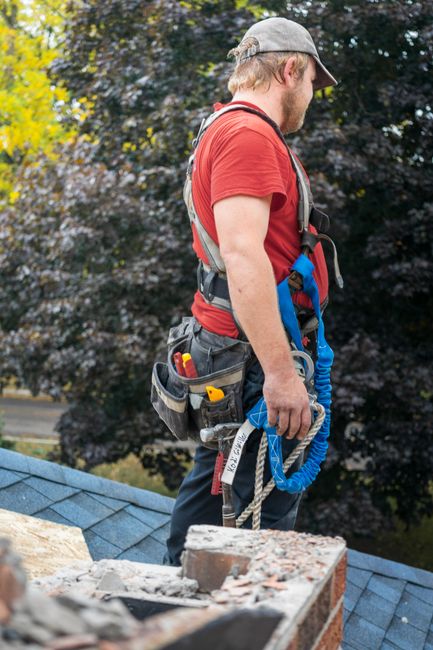
Hanging lights along a roofline can look simple, but the work combines ladder use, electricity, wind, ice, and fragile roofing materials. In Cobleskill, NY, late-season decorating often takes place as temperatures drop, daylight shortens, and wet leaves, frost, snow, or ice make exterior surfaces less predictable.
The safest approach is to keep both feet off the roof whenever possible, use lighting made for outdoor conditions, and attach decorations without puncturing roofing or damaging gutters.
Is it safe to stand on the roof to hang lights?
Usually, no. Most roof-edge lighting can be installed from a properly positioned ladder, and climbing onto a sloped roof adds fall risk without being necessary for many homes.
Roof surfaces can become slippery from dew, frost, damp leaves, or thin ice that is difficult to see. Asphalt shingles may also be damaged by repeated foot traffic, especially when they are cold and brittle. Never walk on a roof covered with snow, ice, or heavy moisture.
Before setting up a ladder:
- Inspect the ground for mud, leaves, uneven soil, and ice.
- Place the ladder on firm, level ground.
- Keep the ladder away from overhead electrical lines.
- Face the ladder while climbing and maintain three points of contact.
- Do not stand on the top step of a stepladder or the highest unsafe rungs of an extension ladder.
- Have another adult hold or stabilize the ladder when conditions are less than ideal.
- Use a tool bucket or belt instead of carrying loose items while climbing.
A ladder should be tall enough to reach the work without leaning sideways. Overreaching is a common cause of falls. Move the ladder instead of stretching around a roof corner.
What type of lights should be used outdoors?
Use light strings specifically labeled for outdoor use. Indoor-only lights may not have the weather resistance needed for exposure to rain, melting snow, freezing temperatures, and wind.
Before installation, examine every strand for:
- Frayed, cracked, or exposed wiring
- Loose sockets or missing bulbs
- Bent or damaged plugs
- Burn marks or melted plastic
- Broken insulation near the plug or connector
Discard damaged strands rather than repairing them with tape. Check the product label for electrical safety testing and follow the manufacturer’s limits for connecting multiple strands. Do not exceed the number of light sets allowed to connect end-to-end, and do not overload an outlet or power strip.
Outdoor decorations should be connected to a ground-fault circuit interrupter, commonly called a GFCI. This protection can shut off power when electricity begins leaking through an unintended path, such as wet ground or a damaged cord. If a GFCI trips repeatedly, unplug the decorations and investigate the problem instead of repeatedly resetting it.
How should lights be attached to shingles and gutters?
Use purpose-made plastic light clips or hooks that hold the wire without piercing the roof. Clips may be designed for shingles, gutters, eaves, railings, or siding, so use the type that matches the surface.
Avoid:
- Nails, screws, and staples through shingles
- Fasteners driven into roof flashing
- Puncturing membranes around chimneys, vents, or skylights
- Pinching cords beneath windows or doors
- Draping heavy decorations from a gutter edge
- Pulling the wire tight enough to strain sockets or connectors
Roof penetrations can create leak points, while staples may crush insulation or expose conductors. Even a small puncture can become a larger problem after repeated freeze-thaw cycles.
Gutters should not be treated as structural supports for heavy decorations. Excess weight can distort the gutter, loosen hangers, or interfere with drainage. Leave enough slack for normal movement, but do not allow long loops to hang where they can collect ice or snag on branches.
How can lights be arranged without harming the roof?
Measure the roofline from the ground before climbing. This helps determine how many strands are needed and reduces the temptation to stretch, splice, or improvise while on the ladder.
Start at the outlet or intended power connection and work outward. Keep connectors elevated where practical and protected from standing water. Do not bury connections under snow or place them directly on the ground where moisture can collect.
At corners, use gentle bends rather than sharp folds. Around gutters and eaves, attach lights at regular intervals so the strand does not sag heavily between clips. Keep lights clear of:
- Chimney openings and flues
- Dryer, furnace, and plumbing vents
- Areas where snow slides from a higher roof
- Moving garage doors
- Sharp metal edges
- Tree branches that rub against the cord
Never route wiring through a chimney, attic vent, or other opening that could expose it to heat or abrasion. Keep cords away from hot surfaces and do not use a door or window to pinch a cable into place.
What should Cobleskill residents consider before decorating?
Cold-weather timing matters. A dry afternoon may provide a safer installation window than a later day after freezing rain or wet snow. Roof edges can collect wind-driven moisture, and shaded areas may remain icy even when nearby pavement appears clear.
Homes with steep roofs, multiple roof levels, dormers, or tall gable ends require extra caution. A ladder positioned on a slope or against an unstable surface is not made safe by having a second person nearby. Snow guards, satellite equipment, antennas, and overhead utility lines can also complicate access.
Plan for winter weather after the lights are installed. Strong wind, drifting snow, and ice buildup can pull on clips and cords. Inspect the display from the ground after the first storm and remove anything that has come loose. Do not climb onto an icy roof to make adjustments.
Should lights remain on overnight?
Turning lights off before going to bed reduces unnecessary electrical use and limits the time a damaged strand could remain energized. An outdoor-rated timer can help, provided it is used according to its instructions and protected from direct exposure to water.
Switch lights off during severe weather, especially when wind, freezing rain, or heavy wet snow is expected. Do not leave decorations operating if a cord becomes warm, a plug shows discoloration, a breaker trips, or lights flicker unexpectedly.
Unplug by gripping the plug rather than pulling on the cord. At the end of the season, remove clips carefully, coil strands loosely, and store them in a dry place away from sharp tools and rodents.
When is roof-light installation too hazardous to do personally?
Stop rather than proceed if the ground is icy, the roof is snow-covered, the ladder cannot be placed level, or electrical lines are within the ladder’s working area. A roofline that cannot be reached without stepping onto the roof may also exceed the practical limits of routine decorating.
Professional assistance is warranted when the work involves a steep or high roof, damaged roofing, unstable gutters, electrical defects, or fall-protection equipment that the homeowner does not know how to use. No seasonal display is worth risking a fall, roof leak, electrical shock, or damage that remains long after the lights are removed.
