
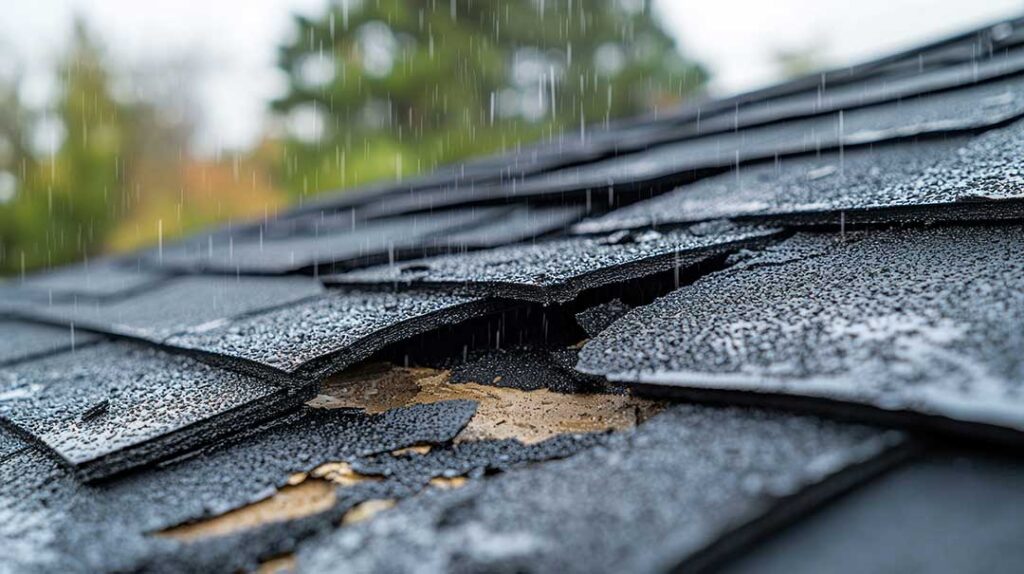
Holiday decorations are usually stored for many months, but poor storage habits can create roofing problems long before the next season arrives. In Cobleskill, NY, where winter snow, ice, freezing temperatures, and spring moisture can affect homes, decorations should be kept away from roof surfaces, attic ventilation paths, and areas where condensation may develop.
Can holiday decorations be stored in the attic?
Yes, but only when the attic is dry, properly ventilated, and suitable for storage. The main concern is not the decorations themselves; it is the way boxes, artificial greenery, lights, and seasonal displays can block airflow or place weight in unsafe locations.
Before using an attic for holiday storage, check for:
- Damp insulation or water staining
- Musty odors or visible mold
- Frost or condensation on nails and roof sheathing
- Compressed insulation near the attic access
- Blocked soffit vents, ridge vents, gable vents, or other ventilation openings
- Weak flooring or areas without a safe walking surface
Storage should remain on a properly supported attic floor or platform. Do not place boxes directly on ceiling drywall, between unsupported ceiling joists, or against roof sheathing. A ceiling can appear solid from below while still being unable to support concentrated loads above.
Why can attic storage affect a roof?
Attic storage can damage a roof indirectly by interfering with ventilation and moisture control. Warm, moist air from the living space naturally moves toward the attic. If that moisture cannot escape, it may condense on cold roof components during winter.
Boxes and loose decorations can block air movement at the eaves. This is especially concerning when storage is pushed into the edges of the attic, where soffit vents often bring in outside air. Blocked ventilation can contribute to:
- Frost buildup on the underside of the roof
- Damp insulation
- Wood deterioration
- Mold growth
- Rusted fasteners
- Ice dams caused by uneven roof temperatures
Keep stored items several inches away from ventilation openings and maintain clear air channels from the eaves toward the upper portion of the roof. Do not cover vents with plastic tubs, cardboard, wrapping paper, or fabric storage bags.
Are plastic storage bins safer than cardboard boxes?
Plastic bins can protect decorations from dust and minor moisture, but they do not correct a damp attic or make an unsafe storage area suitable. Cardboard absorbs moisture and may become soft, heavy, or moldy if condensation or a small roof leak develops. Plastic bins are more durable, but tightly sealed containers can trap moisture if damp items are packed inside.
Use clean, dry containers and allow decorations to dry fully before storing them. Clear or labeled bins also reduce the need to move multiple boxes around the attic later. Heavy bins should be placed low and close to supported framing rather than stacked high or positioned near the roof edges.
Avoid overfilling containers. A bin that is difficult to lift increases the chance of being dragged across the attic floor, dropped near the attic opening, or placed carelessly against roof components.
How should outdoor lights and roof decorations be stored?
Outdoor lights should be removed carefully and stored without pulling on wires, clips, gutters, or shingles. Never leave light strings, extension cords, hooks, or fastening devices on the roof after the season ends.
Before storage:
- Inspect cords for cuts, cracking, exposed wire, or melted insulation.
- Remove clips and fasteners without prying against shingles.
- Coil light strings loosely around a spool or flat organizer.
- Keep cords dry and away from sharp tools or metal edges.
- Label sections so they do not need to be untangled by pulling.
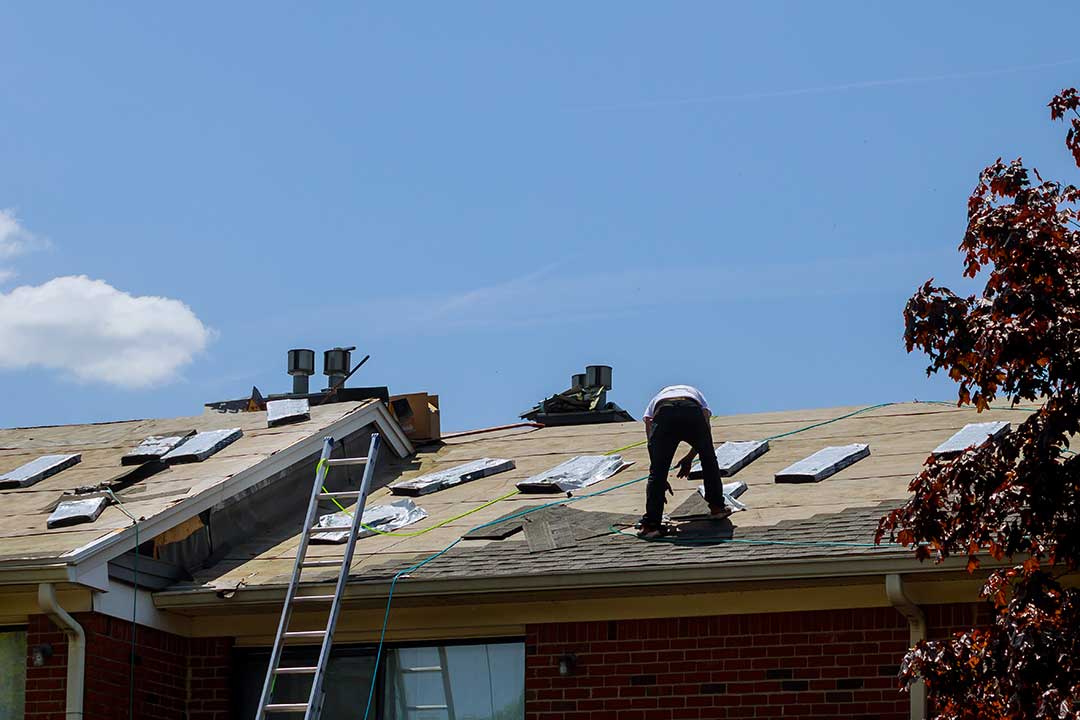
Do not store roof-mounted decorations by leaning them against rafters, roof sheathing, or attic vents. Metal stakes, wire frames, and rigid ornaments can puncture or scrape roofing materials when moved. Place them in padded containers or wrap sharp ends so they cannot damage other items.
Can decorations be stored on the roof, porch roof, or in gutters?
Decorations should never be stored on a roof or inside gutters. Even temporary placement can scrape the protective surface of shingles, loosen granules, bend flashing, or damage membrane roofing. Items can also obstruct drainage and increase the chance of water entering around roof edges, chimneys, skylights, or vents.
Gutters are designed to carry water, not hold decorations, storage containers, lights, or installation hardware. A small obstruction can contribute to overflow during rain or melting snow. In winter, trapped water may freeze and add stress to gutter fasteners and roof-edge components.
If decorations were installed along a roof edge, inspect the area from the ground after removal. Look for missing or displaced shingles, loose flashing, hanging gutter sections, or pieces of broken plastic and wire. Do not climb onto an icy or wet roof to inspect it.
What should be stored away from the attic?
Some decorations are better kept in a dry indoor storage area rather than an attic. Wax candles, delicate fabrics, photographs, electronics, adhesives, and certain plastics can deteriorate under high heat and temperature swings. Attics can become very hot in summer and extremely cold in winter, even when the rest of the house remains comfortable.
Fragile glass ornaments should be packed in sturdy containers with cushioning. Artificial wreaths and garlands should not be compressed beneath heavy boxes because their frames can bend and their materials may become difficult to reshape.
Inflatable decorations should be completely dry before storage. Moisture trapped in folded fabric can produce mildew. Store them loosely rather than tightly compressed, and keep motors or electrical components protected from dust and dampness.
How much weight can an attic hold?
There is no universal safe weight limit for every attic. Capacity depends on the size and spacing of the framing, the condition of the wood, the presence of a finished or unfinished floor, and how the weight is distributed.
Avoid concentrating numerous heavy bins in one small area. Spread storage across supported sections and keep heavier items near walls or load-bearing framing when the structure is designed for that arrangement. Do not store large quantities of ceramic decorations, books, tools, or other dense materials simply because there is unused attic space.
Signs that an attic storage area may be unsafe include sagging floor surfaces, cracked ceiling finishes below, damaged framing, visible water deterioration, or movement underfoot. If the space is not clearly designed for storage, use a lower-level, dry storage area instead.
What should residents check after winter storage?
A quick inspection in spring can identify small problems before they become larger roofing or moisture issues. Look for damp boxes, rust on metal decorations, stained insulation, musty odors, and frost-related damage around attic vents.
Also check whether stored items have shifted into ventilation paths during the winter. Snow and ice can make roof problems harder to identify from outside, so interior attic observations are useful once temperatures rise.
If water staining, active dripping, sagging materials, exposed wiring, or extensive mold is present, avoid disturbing the area until the hazard is understood. Electrical damage and unstable attic surfaces can create safety risks separate from the storage problem itself.
Proper holiday storage is mainly a matter of keeping weight supported, moisture controlled, ventilation open, and sharp or heavy objects away from roofing materials. Those habits help protect both the decorations and the roof through the region’s long winter storage season.
