
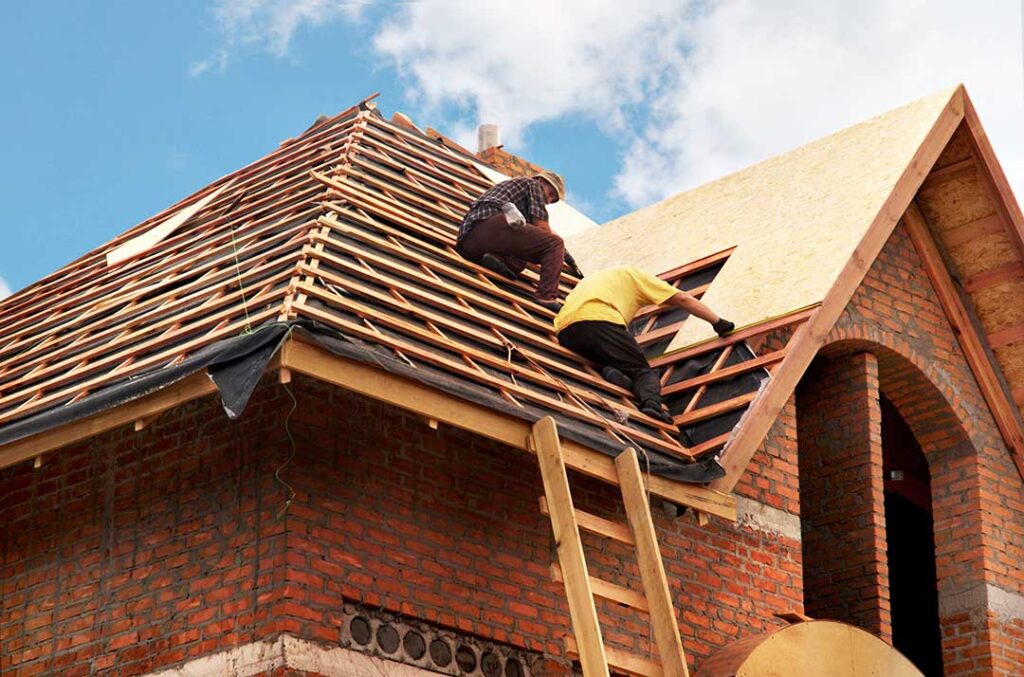
Roof underlayment is the protective layer installed between the roof deck and the outer roofing material. Although it is hidden after installation, it helps limit water intrusion, protect the roof structure, and improve performance during rain, snow, wind, and freeze-thaw conditions.
For homes in Cobleskill, NY, underlayment deserves attention because roofs must manage changing weather throughout the year. Snow accumulation, ice formation, wind-driven rain, and repeated temperature swings can test every layer of a roofing system—not only the shingles or metal visible from the ground.
What does roof underlayment do?
Roof underlayment creates a secondary barrier beneath the roof covering. If wind-driven rain gets under a shingle, a fastener hole allows minor seepage, or melting snow moves beneath the outer material, the underlayment helps direct water toward the roof edge instead of allowing it to reach the roof deck.
It also serves several supporting functions:
- Separates the roof covering from the wood roof deck
- Reduces the chance of moisture reaching framing and insulation
- Provides temporary weather protection during construction
- Helps protect the deck from resin, dirt, and moisture
- Supports certain roofing materials according to their installation requirements
Underlayment is not intended to replace properly installed shingles, flashing, ventilation, or drainage. It is one part of a layered roofing system.
What are the main types of underlayment?
The three broad categories are asphalt-saturated felt, synthetic underlayment, and self-adhering membrane.
Asphalt-saturated felt has been used for many decades. It is made from a paper or fiberglass base saturated with asphalt. Felt is generally familiar, widely available, and suitable for many conventional roof assemblies when installed correctly. However, it can wrinkle, tear, or absorb moisture if left exposed for too long.
Synthetic underlayment is made from engineered plastic materials. It is usually lighter than felt, resists tearing more effectively, and often tolerates temporary exposure better. Its performance depends on the specific product, fastening method, roof design, and installation instructions.
Self-adhering membrane has a sticky backing that bonds to the roof deck. It is commonly used in areas that need extra protection, such as valleys, eaves, roof edges, and around penetrations. Some membranes are designed to help protect against water that can move beneath the roof covering during ice formation.
These materials are not interchangeable in every situation. A roof’s slope, covering, local weather exposure, deck condition, and manufacturer requirements all affect which underlayment is appropriate.
Why are roof edges and valleys treated differently?
Roof valleys and lower roof edges receive concentrated water flow and deserve additional protection. Valleys collect runoff from two roof slopes, while eaves are exposed to water that may back up during ice formation or heavy snow conditions.
Self-adhering membrane is often used in these areas because it can seal around properly installed fasteners and form a more continuous barrier. The exact coverage depends on roof design, local requirements, and the instructions for the roofing material.
Other locations that may need specialized protection include:
- Around chimneys and roof-to-wall intersections
- Beneath skylights and roof windows
- Around plumbing vents and other penetrations
- At transitions between different roof slopes
- Along roof edges exposed to wind-driven rain
Underlayment cannot correct poorly designed or damaged flashing. Flashing remains the primary defense at many roof intersections, while underlayment provides an additional layer behind it.
Does underlayment prevent leaks?
Underlayment can reduce the likelihood and severity of leaks, but it cannot guarantee that a roof will remain watertight. Leaks may result from damaged roof coverings, loose or exposed fasteners, failed flashing, clogged drainage paths, inadequate ventilation, or structural movement.
A roof with excellent underlayment can still leak if water enters through an open seam or damaged flashing. Likewise, a roof with properly installed shingles may suffer damage if the underlayment is torn, incorrectly overlapped, or fastened in a way that allows water to track through the system.
The most reliable protection comes from coordination among the roof deck, underlayment, flashing, roof covering, ventilation, and drainage components.
How does winter weather affect underlayment?
In Cobleskill, winter conditions can place unusual stress on roof assemblies. Snow can remain on a roof for extended periods, then partially melt during warmer conditions. At night, that water may freeze again near eaves or in shaded areas.
This cycle can create ice buildup and cause water to move in directions it would not normally travel. Underlayment near the eaves may help reduce damage from this type of backup, but it works best when combined with sound flashing, adequate insulation, proper attic ventilation, and clear drainage paths.
Homeowners should not assume that visible snow automatically indicates a problem. More useful warning signs include:
- Water stains on ceilings or upper walls
- Damp insulation in the attic
- Dripping during or after a thaw
- Icicles accompanied by interior moisture
- Repeated leaks in the same roof area
- Musty odors or darkened roof decking

Removing snow or ice from a roof can be hazardous and may damage the roof covering. Walking on a snow-covered or icy roof is especially risky.
Can old underlayment be reused during a roof replacement?
Usually, underlayment is replaced when the outer roof covering is removed. Existing material may be brittle, torn, wrinkled, stained, or no longer firmly attached to the deck. Even when it appears intact, its condition can be difficult to judge until the roof covering has been taken off.
A roof replacement also provides an opportunity to inspect the roof deck. If the deck has rot, delamination, mold-like staining, or areas weakened by long-term moisture, installing new underlayment over it will not solve the underlying problem.
The deck should be dry, reasonably clean, and structurally sound before new underlayment is installed.
What installation details matter most?
Correct overlaps, fastening, sealing, and sequencing are more important than simply choosing a material with a particular label. Underlayment should generally be installed so water flows over overlaps rather than underneath them.
Important details include:
- Following the roofing material manufacturer’s instructions
- Keeping the material flat and free from major wrinkles
- Using the specified fasteners and spacing
- Protecting valleys, eaves, ridges, and penetrations appropriately
- Avoiding damage from foot traffic or sharp tools
- Limiting exposure to weather beyond the stated time
- Coordinating installation with flashing and roof ventilation
Some underlayments are designed for specific roof coverings and slopes. Using a material outside its approved application can create problems even if the installation looks neat.
What should homeowners ask when inspecting a roof?
Because underlayment is hidden, it is rarely possible to evaluate its condition from the yard. Questions are most useful during roof work or when reviewing documentation:
- What type of underlayment was installed?
- Where was self-adhering membrane used?
- Was the roof deck inspected before installation?
- How long can the material safely remain exposed?
- Were valleys, eaves, and penetrations treated according to the roof covering requirements?
- Are there photographs of concealed work?
- Were any wet or damaged deck sections replaced?
These questions help distinguish a complete roof system from a surface-only repair. They also create a useful record for future maintenance, particularly when a home has several roof additions or areas with different slopes.
A sound roof depends on more than the material visible from below. Underlayment quietly performs an essential protective role, especially during the wet, snowy, and changeable conditions common to the local area. Understanding that hidden layer makes it easier to recognize why roof design, installation details, flashing, and maintenance all matter together.
