
A typical residential roof lasts about 15 to 30 years, but the actual service life depends on the roofing material, installation quality, ventilation, roof design, maintenance, and exposure to weather. In Cobleskill, NY, winter snow, ice, freezing temperatures, wind, and repeated thawing can affect how quickly roofing materials age.
A roof’s expected lifespan is a useful planning estimate, not a guarantee. Two roofs installed during the same year may reach the end of their useful life at different times.
How long do common roofing materials last?
The material covering the roof has the greatest influence on its expected lifespan. Typical ranges include:
- Basic asphalt shingles: About 15 to 20 years
- Architectural asphalt shingles: About 20 to 30 years
- Metal roofing: About 30 to และ 70 years, depending on the metal, finish, design, and maintenance
- Wood shingles or shakes: About 20 to 30 years when properly maintained
- Slate roofing: Often 50 years or longer
- Tile roofing: Commonly 40 to 70 years or more
These ranges assume suitable installation and normal maintenance. Severe weather, poor attic ventilation, moisture problems, or repeated physical damage can shorten the life of nearly any roofing system.
Asphalt shingles are common because they balance cost, appearance, and ease of installation. Their lifespan is often shorter than the advertised product rating because laboratory ratings do not account for every condition on an individual home. A shingle labeled for 25 or 30 years may not perform that long if the roof experiences persistent shade, poor airflow, storm damage, or installation problems.
What affects roof life in Cobleskill?
Local weather conditions can be especially hard on roofing materials. Winter conditions create several types of stress at the same time.
Snow adds weight to the roof, particularly when wet snow accumulates. Ice can form along eaves when heat escapes through the attic and melts snow above. The water may refreeze near colder roof edges, creating ice dams that can force moisture beneath shingles and into roof sheathing, insulation, or interior walls.
Freezing and thawing also affect roofing components. Water can enter small cracks or gaps, freeze, expand, and gradually enlarge the opening. Wind can lift loose shingles or damage flashing around chimneys, plumbing vents, skylights, and roof edges.
Summer conditions matter as well. Strong sunlight and heat can dry or weaken some materials, while rapid temperature changes cause roofing components to expand and contract. Trees near a home may add shade, falling branches, leaves, and trapped moisture. Shade is not automatically harmful, but a roof that stays damp for long periods may develop moss or algae growth and deteriorate more quickly.
Does a new roof always last as long as its warranty?
No. A warranty period and a roof’s practical lifespan are not the same thing.
A manufacturer’s warranty may cover defects in materials, while installation-related coverage may be separate. Warranties also commonly include exclusions, maintenance requirements, wind limits, or prorated coverage. A warranty does not mean a roof will remain in ideal condition for the entire stated period.
The roof’s service life depends on how it performs in actual conditions. Proper drainage, adequate ventilation, sound decking, correct flashing, and careful installation may matter as much as the shingle label.
How can someone tell how old a roof is?
The installation date may be recorded in closing documents, building records, invoices, insurance paperwork, or home-maintenance files. If records are unavailable, a roof covering’s approximate age can sometimes be estimated from its appearance and condition.
Age clues include:
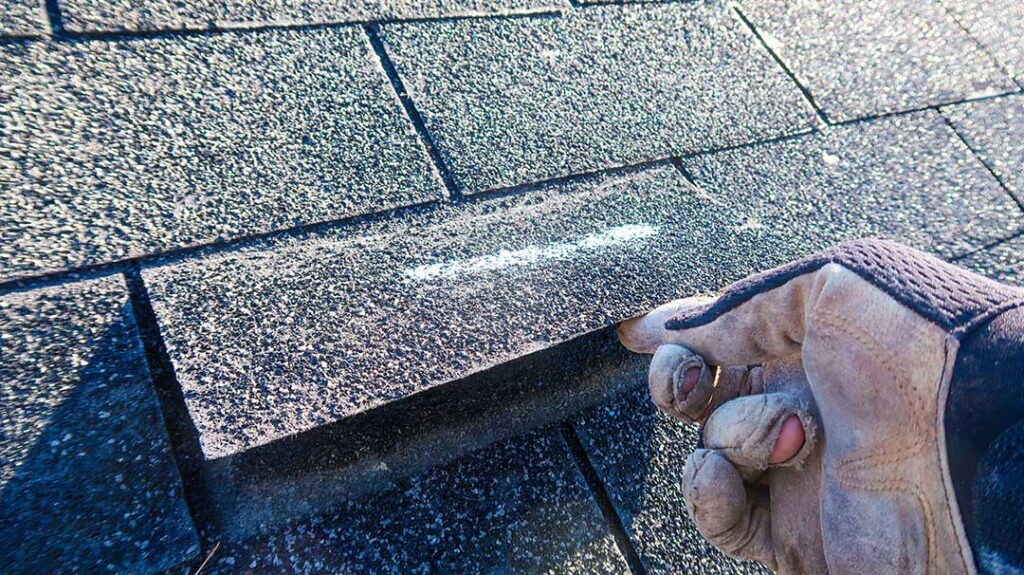
- Curling, cracking, or missing shingles
- Areas where the granule surface has worn away
- Dark or uneven patches
- Exposed fasteners
- Rusted or damaged flashing
- Sagging roof lines
- Repeated repairs in the same area
- Water stains in attic spaces or on ceilings
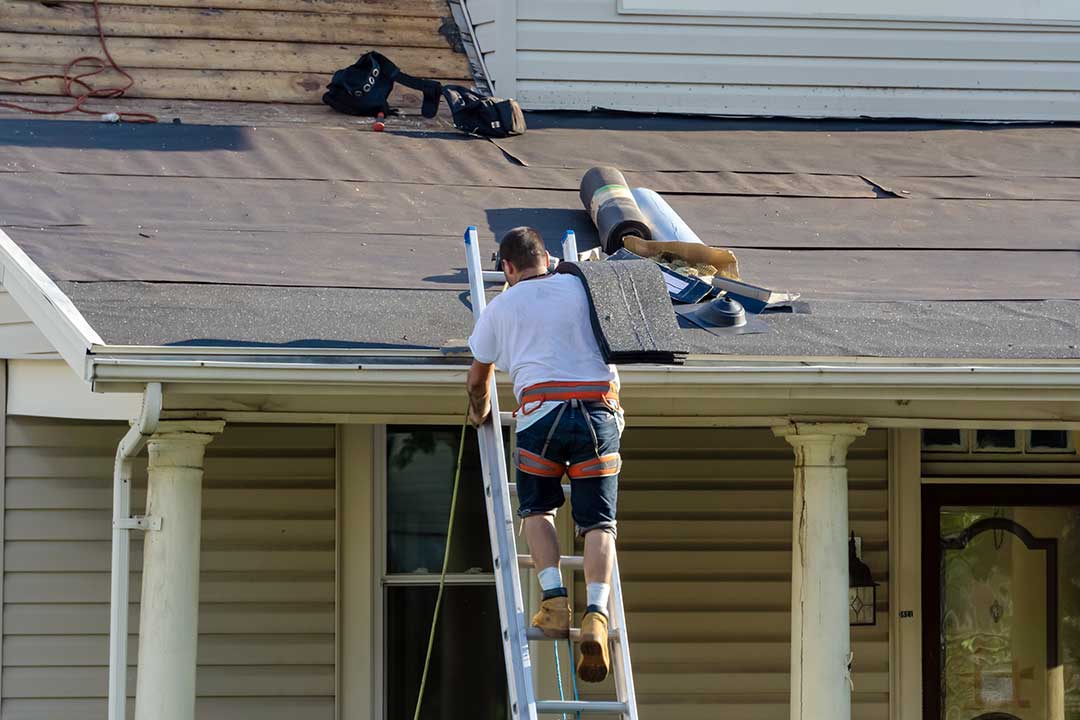
Visual age estimates are not exact. A roof may look acceptable from the ground while flashing, underlayment, ventilation, or roof decking has already developed problems. Conversely, a roof with surface discoloration may still have useful service life remaining.
Should a roof be replaced based on age alone?
Not always. Age should be considered together with condition, repair history, and the likelihood of continuing problems.
A roof near the end of its expected lifespan may still provide reliable protection if it is well maintained and free from major defects. A younger roof may need extensive work if it was damaged by wind, installed over defective decking, exposed to persistent moisture, or affected by poor attic ventilation.
Replacement becomes more likely when several warning signs appear together, such as widespread shingle deterioration, recurring leaks, soft or damaged decking, significant flashing failure, or visible sagging. A small isolated problem does not automatically mean the entire roof has reached the end of its life.
How often should a roof be checked?
A basic visual review twice a year is practical for many homes: once after winter and again before the next cold-weather season. Additional checks are sensible after a major windstorm, heavy snow, falling branch, or suspected ice-dam event.
From the ground, look for missing or displaced shingles, loose metal, damaged gutters, and debris collecting in valleys. Inside the attic, signs of concern include damp insulation, daylight visible through the roof deck, mold-like growth, rusted fasteners, and water staining.
Walking on a roof can damage shingles and create a fall hazard, especially when the surface is wet, icy, steep, or deteriorated. Roof access should be limited when conditions are unsafe.
Does attic ventilation really affect roof lifespan?
Yes. Attic ventilation helps manage heat and moisture beneath the roof covering. Without adequate airflow, heat can build up in summer and moisture can remain trapped during winter. Those conditions may contribute to shingle aging, condensation, mold growth, wood decay, and ice-dam formation.
Ventilation must work with insulation and air sealing. Adding vents without addressing air leakage from the living space may not solve the underlying moisture problem. Blocked soffit vents, compressed insulation, and poorly sealed attic penetrations can also interfere with roof performance.
What is the practical answer for a typical homeowner?
For a common asphalt-shingle roof, planning for roughly 20 years is reasonable, while recognizing that actual performance may range from less than 15 years to more than 30 years. A roof installed with quality materials, good ventilation, proper flashing, and regular inspection may last toward the longer end of that range.
For area households, the most useful approach is to track the installation date, inspect after severe weather, keep drainage paths clear, and respond promptly to small leaks or damaged flashing. Regular attention cannot stop normal aging, but it can prevent a manageable defect from becoming a larger roof or interior-building problem.
